
Why the Right Torsion Spring Matters
The right torsion spring helps protect the garage door opener, cables, rollers, tracks, and panels. It also keeps your door easier and safer to use every day.
Choosing the wrong torsion spring can create serious problems. A spring that is too weak may fail to lift the door. A spring that is too strong may make the door shoot upward or strain other parts of the system. A poorly matched spring can also damage the opener, cables, drums, hinges, and tracks.
For Centennial homeowners, where cold mornings, dry air, and seasonal temperature swings can add stress to garage door parts, choosing the correct torsion spring is especially important.
Torsion Springs vs Extension Springs
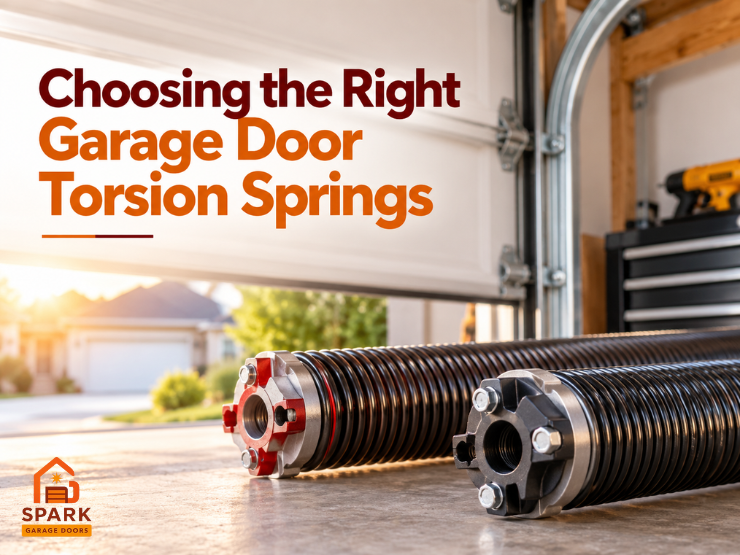
Most modern garage doors use either torsion springs or extension springs. Torsion springs are mounted horizontally above the garage door opening. They twist to store energy and help lift the door.
Extension springs are usually mounted along the sides of the upper tracks. They stretch and contract as the door moves.
Torsion springs are generally preferred for many residential garage doors because they offer smoother movement, better balance, and more controlled lifting. They also tend to be safer and more durable when installed correctly.
Before choosing a replacement, confirm which spring system your door uses. If your door uses torsion springs, do not replace them with a random spring based only on size or appearance.
Never Guess the Spring Size
Torsion springs must be matched carefully to the door. Guessing is one of the biggest mistakes homeowners make. Two springs can look similar but have very different lifting power.
The correct spring depends on several measurements: wire size, inside diameter, overall length, wind direction, and door weight. If any of these numbers are wrong, the door may not balance properly.
A garage door spring is under extreme tension. This is not a part where “close enough” is acceptable. Correct measurement is essential for safety and performance.
Measure the Wire Size
Wire size is one of the most important torsion spring measurements. It tells you the thickness of the metal used in the coil. Even a small difference in wire size can change how much torque the spring produces.
To measure wire size, count either 10 or 20 coils on the old spring and measure that section with a tape measure. Then compare the measurement to a torsion spring wire chart.
This method is more accurate than trying to measure one coil directly, because tiny measurement errors can lead to the wrong replacement size.
If the old spring is broken, you can still usually measure the coils, but the spring may be stretched or separated. A professional can help confirm the correct size if the spring is damaged or distorted.
Check the Inside Diameter
The inside diameter is the width of the opening inside the spring. Common residential torsion spring inside diameters are often 1.75 inches or 2 inches, but you should never assume.
Sometimes the stationary cone has markings that show the inside diameter. If not, it can be measured directly across the inside opening of the spring.
The inside diameter must match the torsion system hardware. If the diameter is wrong, the spring may not fit the shaft or cones properly.
Measure the Overall Spring Length
The overall spring length is the length of the coiled metal from end to end, not including the cones. Measure the spring while it is unwound and relaxed if possible.
If the spring is broken, measure both broken pieces and add the lengths together. This helps estimate the original spring length.
Spring length affects lifting performance and cycle life. Replacing a spring with the wrong length can throw off the door balance.
Identify the Wind Direction
Torsion springs come in left-wound and right-wound versions. Wind direction matters because each spring is designed to work on a specific side of the center bracket.
A right-wound spring and a left-wound spring are not interchangeable. If the spring is installed on the wrong side, it will not wind correctly or lift the door properly.
You can identify wind direction by looking at the direction of the coils. Cone colors may also help, although color coding can vary by manufacturer. Because this can be confusing, it is a good idea to have a technician confirm wind direction before installation.
Know the Actual Door Weight
The torsion spring must match the actual weight of the garage door. Door weight depends on material, size, insulation, windows, reinforcement struts, and panel design.
A lightweight single-car steel door needs a very different spring than a large insulated double-car door. If your door has been modified over time, such as adding insulation or reinforcement, the old spring may no longer be the best reference.
To weigh the door, the opener must be disconnected and the spring tension must be safely released. Then the door can be lowered onto a scale to measure the true weight. This is not something most homeowners should attempt without the right tools and experience.
A professional garage door technician can measure the door weight safely and match the correct spring.
Understand Cycle Life
Garage door springs are rated by cycles. One cycle means the door opens and closes once. Standard torsion springs often last around 10,000 to 15,000 cycles. For a home that uses the garage door several times per day, those cycles can add up quickly.
High-cycle springs may last 25,000 to 50,000 cycles, depending on the spring and door setup. These can be a smart upgrade for busy households, families with multiple drivers, or homes where the garage is the main entrance.
A higher-cycle spring may cost more upfront, but it can reduce the frequency of replacement and help avoid unexpected breakdowns.
Replace Both Springs in a Two-Spring System
If your garage door has two torsion springs and one breaks, replace both at the same time. The unbroken spring has usually gone through the same number of cycles and may be close to failure.
Replacing only one spring can create imbalance because one spring is new and the other is worn. That can cause uneven movement, opener strain, and premature wear on other parts.
A balanced two-spring system helps the door move more smoothly and safely.
Watch for Signs Your Torsion Spring Is Failing
A torsion spring does not always break without warning. Often, the door begins showing signs first.
The door may feel heavier than usual when lifted manually. It may open only a few inches before stopping. It may close too fast, move unevenly, or make louder popping or creaking sounds. You may see a visible gap in the spring if it has snapped.
Another sign is opener strain. If the opener sounds like it is struggling, the spring may not be doing its job.
Do not keep using the opener if the spring is broken or weak. The opener can burn out, and the door can become unsafe.
Why Centennial Weather Can Affect Springs
Centennial’s seasonal temperature changes can be tough on garage door springs. Metal expands and contracts with temperature shifts. Cold weather can make older springs more brittle, while repeated cycles in changing conditions can add fatigue over time.
Dry air, dust, and lack of lubrication can also contribute to wear. While you cannot stop the weather, you can reduce stress with regular maintenance, proper lubrication, and timely inspections.
A spring matched correctly to the door will perform better through changing conditions than one that is underpowered, overpowered, or poorly installed.
Do Not Choose a Spring Based Only on Price
It can be tempting to choose the cheapest replacement spring, especially if the door still seems simple. But spring quality, cycle rating, coating, correct sizing, and professional installation all matter.
A low-cost spring that fails early or causes balance problems can end up costing more through repeat service calls, opener damage, or emergency repairs.
The right spring should be selected for the door, the usage level, and the expected cycle life, not only the lowest price.
Why Professional Installation Is the Safer Choice
Torsion springs are under extreme tension. Installing or adjusting them requires proper winding bars, correct procedures, and experience. Using the wrong tools or turning the spring the wrong way can cause serious injury.
Whether your spring is broken, worn, noisy, or simply nearing the end of its cycle life, a professional evaluation can prevent bigger problems.
A professional technician can measure the spring, confirm door weight, identify wind direction, install the correct replacement, balance the door, inspect safety cables and cable drums, and test the opener after the repair.
This is especially important because spring replacement is not just about swapping one part. The entire lift system must work together.
Quality Garage Door Service in Centennial for Torsion Springs
Choosing the right garage door torsion spring requires accurate measurements, the correct wind direction, the right inside diameter, proper wire size, accurate spring length, and a clear understanding of the door’s weight. Cycle life also matters, especially for busy Centennial homes where the garage door is used multiple times a day.
Never guess the spring size, and do not attempt torsion spring replacement without the right tools and experience. The correct spring keeps your garage door balanced, smooth, reliable, and safe. For most homeowners, the safest and smartest choice is to have a professional measure, match, and install the spring properly.
Spark Garage Door Centennial can inspect your garage door system, measure the correct torsion spring specifications, and install the right spring for safe, balanced operation. We can also perform spring repair.