
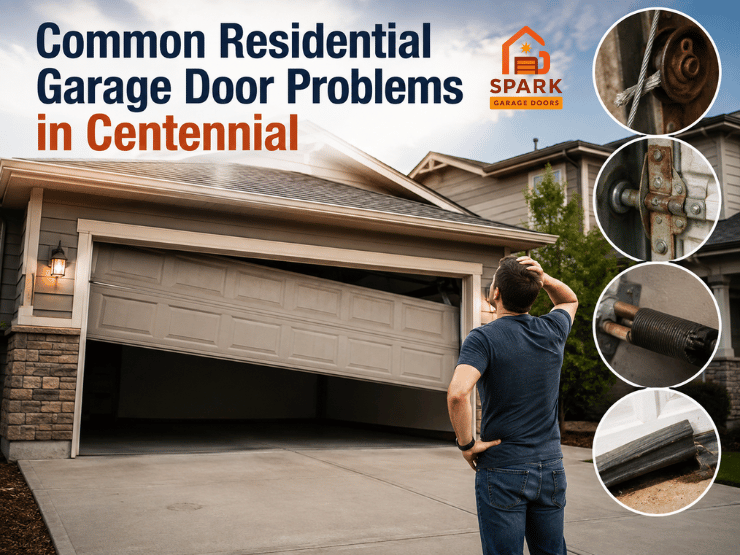
Most garage door problems do not happen all at once. They usually start small, then get louder, slower, or more unpredictable over time. Knowing the warning signs helps Centennial homeowners catch problems early before a minor issue turns into a stuck door or emergency repair.
Broken Torsion or Extension Springs
Broken springs are one of the most common residential garage door problems in Centennial. Springs carry most of the door’s weight, which allows the opener to lift and lower the door smoothly. Every time the door opens and closes, the springs complete a cycle. After enough cycles, they lose tension or snap.
Colorado’s temperature swings can make spring wear worse. Cold nights and warmer daytime conditions cause metal parts to expand and contract. Over time, that added stress can contribute to fatigue in torsion springs and extension springs.
A broken spring is often easy to spot. The door may feel extremely heavy, open only a few inches, close too fast, or refuse to move at all. You may also hear a loud bang from the garage when the spring breaks.
Spring repair is not a safe DIY job. Garage door springs are under high tension, and the wrong move can cause serious injury. If the spring is broken or the door feels unusually heavy, stop using the opener and call a professional.
Damaged Rollers That Make the Door Shake or Grind
Rollers guide the garage door through the tracks. When they wear out, crack, rust, or lose smooth movement, the door may shake, jerk, grind, or sound louder than usual.
Centennial’s dry air and seasonal temperature changes can contribute to roller wear, especially if the rollers are not lubricated regularly. Older steel rollers can become noisy, while lower-quality nylon rollers may crack or flatten over time.
A door with bad rollers puts extra stress on the opener, hinges, tracks, and springs. That means a roller issue can quickly become a larger garage door repair if ignored.
If the door sounds rough, moves unevenly, or vibrates during operation, the rollers should be inspected. In many cases, replacing worn rollers can make the door noticeably quieter and smoother.
Worn or Loose Hinges
Hinges allow the sections of the garage door to bend as the door moves up and down. Over time, hinges can loosen, crack, rust, or pull away from the garage door panels.
When hinges are worn, the door may make popping or creaking sounds. You may also notice gaps between sections, uneven panel movement, or a door that looks like it is flexing too much during operation.
Loose hinges are especially important to address because they can affect the alignment of the entire door. If a hinge fails, one section may shift suddenly, placing stress on the rollers, cables, and tracks.
Homeowners can visually inspect hinges and tighten loose hardware, but cracked or bent hinges should be replaced before they create a bigger problem.
Misaligned Safety Sensors
Safety sensors are designed to stop the garage door from closing on a person, pet, or object. They sit near the bottom of the door tracks and send an invisible beam across the opening. If that beam is blocked or misaligned, the opener will usually reverse the door or refuse to close it.
In a busy Centennial garage, sensors can easily get bumped by bikes, trash cans, snow shovels, yard tools, or car tires. Dust, spiderwebs, and direct sunlight can also interfere with sensor performance.
A common sign of sensor trouble is a door that opens normally but will not close unless you hold down the wall button. You may also see blinking lights on the sensor or opener.
Start by wiping the sensor lenses clean and checking that both sensor lights are steady. If one light is off or flickering, the sensors may need realignment or wiring inspection.
Frayed, Loose, or Snapped Cables
Garage door cables work with the spring system to lift and support the door. When cables rust, fray, slip, or snap, the door can become crooked, jammed, or dangerously unbalanced.
Cable problems should never be ignored. A cable that is starting to fray is already weakened. If it snaps while the door is moving, one side of the door may drop faster than the other, which can bend tracks, damage panels, or cause the door to come off track.
Signs of cable trouble include a crooked door, loose cable hanging near the side, visible fraying, uneven movement, or a door that gets stuck halfway.
Do not try to adjust or replace garage door cables yourself. Cables are connected to the spring system, which means they are under serious tension. This is a professional repair.
Stripped Garage Door Opener Gears
Many homeowners assume the opener motor is bad when the door stops moving. Sometimes the motor is fine, but the internal gears or sprockets are stripped.
Garage door openers often use plastic gears inside the motor housing. After years of use, those gears can wear down, especially if the opener has been lifting an unbalanced door. When the gears strip, you may hear the motor running, but the door does not move properly.
You may also notice grinding sounds, a chain or belt that moves oddly, or white plastic shavings inside the opener cover.
The important thing is to find out why the gear failed. If the garage door is too heavy because of weak springs or dragging rollers, replacing the gear alone will not solve the root cause.
Noisy Garage Door Operation
A noisy garage door is one of the most common complaints from Centennial homeowners. Squeaking, grinding, rattling, popping, or scraping sounds all point to different issues.
Squeaking often comes from dry hinges or rollers. Grinding can point to worn rollers or opener problems. Rattling may mean loose hardware. Scraping may suggest track misalignment or a door that is rubbing where it should not.
Noise is rarely just an annoyance. It is usually the door telling you that friction, vibration, or alignment is getting worse. Cleaning the tracks, lubricating moving parts, and tightening hardware can help, but persistent noise should be inspected.
Misaligned or Squeaky Tracks
Tracks guide the door, so even a small alignment issue can affect the entire system. In Centennial, seasonal temperature shifts, vibration, settling, and regular use can all contribute to track movement.
A track issue may show up as rubbing, scraping, jerky operation, or a door that slows down at the same point every time. You may also see gaps between the rollers and track, bent track sections, or loose brackets.
Tracks should be clean, secure, and properly aligned. Homeowners can wipe out debris, but bending or forcing tracks back into place is risky. If the track is damaged or badly misaligned, professional adjustment is the safer option.
Garage Door Panels With Dents or Damage
Damaged panels are not always just cosmetic. A dented or warped garage door panel can affect how the door moves through the tracks. If one section is bent, the rollers and hinges may not line up correctly, which can strain the opener and other hardware.
Centennial homeowners may see panel damage from hail, wind-blown debris, driveway accidents, or normal wear. Small dents may not affect operation, but larger damage should be checked before it spreads stress through the door system.
Panel repair or replacement can often solve the issue without replacing the full door, depending on the door’s age, model, and condition.
Remote, Keypad, or Wall Button Problems
Sometimes the door is fine, but the controls are the issue. Dead remote batteries, keypad programming errors, damaged wall buttons, or receiver problems can all make the opener seem broken.
If the door works from one control but not another, test the simplest things first. Replace remote batteries, check keypad power, and make sure the opener’s lock mode is not activated.
If every control fails, the issue may be with the opener, power supply, logic board, or wiring.
When to Stop Troubleshooting and Call a Professional
Some garage door issues are safe to inspect visually, but not safe to repair casually. Broken springs, loose cables, crooked doors, snapped hardware, and doors that feel extremely heavy should always be handled by a trained technician.
You should also call for service if the opener strains, the door reverses repeatedly, the tracks look bent, or the door will not stay balanced when disconnected from the opener.
A garage door is heavy, and the spring system stores a lot of force. When something feels unsafe, it usually is.
How Centennial Homeowners Can Prevent Bigger Repairs
The best way to avoid costly garage door problems is routine maintenance. Lubricate hinges, roller stems, and springs with the right garage door lubricant. Keep the tracks clean. Tighten loose hardware. Test the safety sensors. Watch for frayed cables, cracked rollers, and noisy movement.
Also pay attention to balance. A properly balanced door protects the opener, springs, rollers, and cables. If the door feels heavy or will not stay halfway open during a manual balance test, schedule service before the opener gets damaged.
The most common residential garage door problems in Centennial include broken springs, damaged rollers, worn hinges, misaligned safety sensors, snapped cables, stripped opener gears, noisy tracks, and damaged panels. Many of these problems start with small warning signs before becoming major repairs. If your door sounds different, moves unevenly, reverses unexpectedly, or feels heavy, don’t ignore it. Early garage door repair keeps the system safer, quieter, and more reliable through Centennial’s changing seasons.
Need Help With Garage Door Problems in Centennial?
If your garage door is noisy, crooked, stuck, reversing unexpectedly, or showing signs of spring, cable, roller, or opener trouble, don’t wait for it to become an emergency. Spark Garage Door Centennial can inspect the full system, identify the real cause, and handle the repair safely. Schedule professional garage door repair in Centennial today and keep your door running smoothly, quietly, and reliably.