
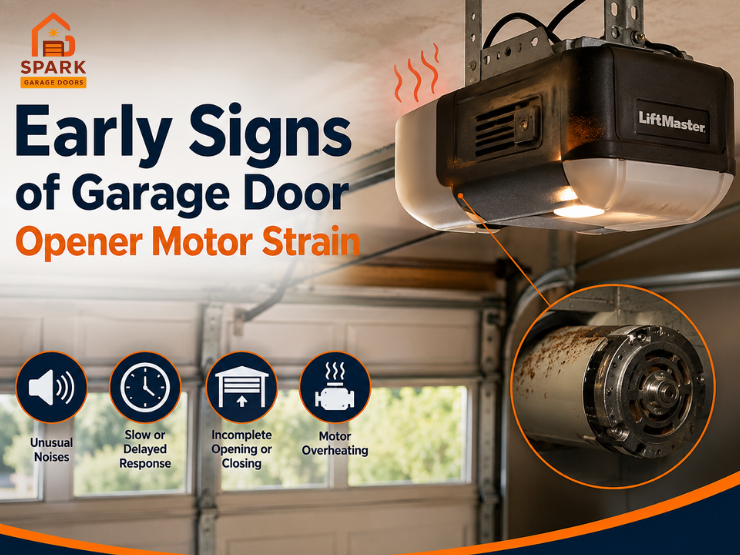
What “Motor Strain” Really Means in a Garage Door System
A garage door opener is designed to guide a balanced garage door, not to lift a door that has become heavy due to a torsion spring issue, a crooked lift from cable problems, or friction from worn nylon rollers. When the door is not moving smoothly, the opener motor works harder, draws more power, and stresses internal components. Over time, that strain can strip gears, trigger safety shutdowns, or cause the opener to fail entirely.
Delayed Response After You Press the Button
One of the first signs of motor strain is a noticeable delay after you press the wall button or remote. The opener pauses, hums, or hesitates before the garage door starts moving. This can happen when the opener is meeting resistance from the door or when the opener’s internal start components are weakening.
If you use a smart controller like Aladdin Connect on a Genie Garage Door Opener, you may notice the delay even more clearly because the command registers, but the door does not move right away. That hesitation is not normal.
Sluggish Opening and Closing in Centennial Winters
If the garage door opens slower than it used to, the motor is likely compensating for added load. In Centennial, this often points to garage door springs losing tension. Springs do the heavy lifting. When a torsion spring weakens, the door becomes heavier, and the garage door opener motor absorbs the stress.
If the door “crawls” at the start of travel or near the top, also consider roller friction and track alignment. Worn steel rollers and dry hinges can make the door feel like it’s dragging through the tracks.
Grinding, Clicking, or Humming Sounds From the Opener
A healthy opener is not silent, but it should not sound harsh. Grinding can signal gear wear inside the opener head. Clicking can indicate the trolley is skipping under load. A steady hum without movement can mean the opener motor is energized but cannot turn the system, often because the door is too heavy or the drive system is jammed.
This is also where drive type matters. A screw drive opener may sound different from a belt or chain drive, but a sudden change in sound is always a warning sign. If the noise got worse recently, something changed mechanically.
Door Shaking, Vibrating, or “Shimming” Along the Tracks
Motor strain is often triggered by instability in the door path. If the garage door shakes, jerks, or vibrates aggressively, the opener is pulling a door that is not tracking cleanly.
In Centennial neighborhoods like Willow Creek and near Arapahoe Road, small shifts over time can contribute to track alignment issues. When tracks are slightly out of plumb, rollers pinch and grind. That increases friction, and friction forces the opener motor to work harder.
If you’ve got older nylon rollers, they may also be cracked or wobbling from UV exposure and cold brittleness, which makes the vibration worse.
Random Reversals and Safety Stops Are Not “Glitches”
If the door reverses for no clear reason, the opener is reacting to resistance or a safety trigger. Dirty or misaligned photo-eyes are common, but motor overload can also trigger reversals.
On Genie systems, Safe-T-Beam sensors can stop or reverse a closing door if the beam is interrupted or misaligned. Many homeowners assume it’s a “sensor problem,” but resistance from a binding door can make the opener behave similarly. Auto-reverse sensors and force settings are designed to prevent damage and injury. When the system starts reversing often, it’s telling you something is wrong.
Stopping Midway Is a Serious Sign of Overload
A garage door that stops halfway is often overloaded or binding. In colder periods, dry rollers and stiff bearings can increase friction. If the door also feels heavy when you try to lift it manually, stop using the opener. A heavy door points to spring tension loss, and continuing to run the opener can burn out the motor or damage the circuits.
If you heard a loud bang earlier and the door is suddenly heavy, that can indicate a broken torsion spring. That situation is not a “keep trying” scenario.
The Manual Balance Test That Exposes the Real Root Cause
If you want a quick, high-value test, do this safely. Pull the emergency release to disconnect the opener and lift the garage door by hand.
A properly balanced door should lift without extreme effort and should stay roughly in place near the halfway point. If it drops quickly or feels very heavy, your springs are failing or the system is out of balance. That imbalance is a direct cause of opener motor strain.
If the door is hard to lift, do not force it. That can worsen cable wear and contribute to off-track behavior.
Common Centennial Causes Behind Opener Motor Strain
In Centennial, garage door repair calls for motor strain usually trace back to a few patterns. Weak garage door springs are the biggest driver. Worn rollers are another, especially when nylon rollers crack or steel rollers corrode and stop spinning smoothly. Track misalignment and loose hardware can create binding that overloads the opener. Weather stripping and door seals can also swell or shift with water intrusion, which can cause rubbing or inconsistent closing pressure that triggers reversals.
If you notice water intrusion around the garage perimeter, it can also contribute to rust on hardware and even mold growth in damp areas, which is not directly a motor issue but often correlates with neglected maintenance and corrosion.
Why Ignoring These Signs Gets Expensive Fast
When an opener is overloaded, it does not “power through” forever. Gears wear down. Motors overheat. Sensors and boards fail. A door that starts binding also stresses tracks and rollers until the door can go off track. What could have been a spring adjustment, roller replacement, or track alignment repair becomes a full opener replacement plus additional garage door repair costs.
When to Call a Garage Door Repair Pro in Centennial
If you notice repeated hesitation, sluggish movement, grinding noises, frequent reversals, or mid-cycle stops, it’s time for professional inspection. A technician should check door balance, torsion spring condition, cable tension, rollers, track alignment, and opener load.
If your opener is older than 10 to 15 years, you may still have options, but the decision should be made after confirming the door is balanced and not forcing the motor to do impossible work.
Featured Image Suggestion for Better On-Page SEO
A simple featured image helps on-page signals. Use a photo of a garage door opener motor unit with a tech checking the rail and trolley, or a close-up of rollers and tracks with the opener in the background. Name the image file using a clean keyword format like garage-door-opener-motor-strain-centennial.jpg.
Garage Repair in Centennial
Motor strain is usually the garage door opener warning you about the door, not the opener itself failing first. In Centennial, CO, the most common causes are weak garage door springs, worn rollers, track misalignment, and resistance that triggers auto-reverse sensors like Safe-T-Beam sensors on Genie Garage Door Opener systems. Motor strain matters for garage doors If you catch the early signs, delayed response, slow travel, grinding, vibration, reversals, and mid-cycle stops, you can prevent a burnout and keep the garage door system running smoothly through Colorado weather. Get in touch with Spark Garage Doors for all your garage needs!