
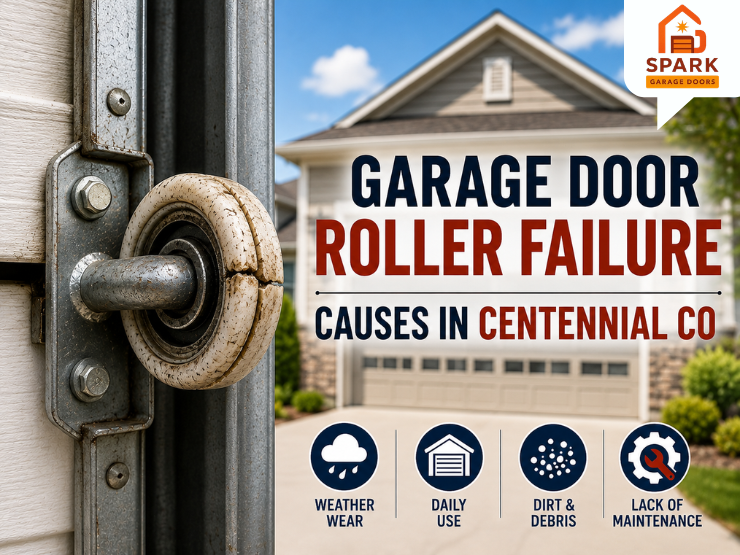
Why Roller Failure Is So Common in Centennial, CO
In many Arapahoe County neighborhoods, including Southglenn, Walnut Hills, and Willow Creek, you also see subtle settling over time. That structural movement changes how the door sits in the opening. Once the door is no longer traveling perfectly straight, rollers become the first part to complain, then the tracks, hinges, and opener follow.
What Rollers Actually Do in a Garage Door System
A garage door roller is a wheel mounted in a hinge that rides inside the track. When the roller spins freely, the door rolls instead of drags. When the roller binds, the door starts sliding and grinding. That creates noise, vibration, uneven lifting, and extra load on the Garage Door Opener. If you ignore it, what starts as “a loud door” can turn into track repair, Garage Door Cable Repair, spring replacement, or even logic boards failing in the opener from repeated strain.
Rollers do not fail in isolation. They fail faster when the entire system is out of balance, misaligned, or running dry.
Colorado Freeze-Thaw Cycles Destroy Bearings Over Time
Centennial weather shifts fast. Cold nights, warm afternoons, then cold again. That constant expansion and contraction is rough on metal and bearings. Moisture can work its way into the bearing assembly, then freeze, then expand, then thaw, then repeat. Over time, bearings stop turning smoothly.
When bearings bind, the roller stops rolling and starts dragging inside the track. Dragging creates flat spots on the wheel and accelerates wear on garage door tracks. Once that happens, the door movement feels rough and the sound changes from a mild squeak to grinding or rumbling.
Rust and Oxidation Make Rollers Slide Instead of Roll
Even though Colorado is dry, you still get snow melt, condensation, and humidity swings. Metal rollers and exposed ball bearings can oxidize. Rust increases friction and causes the roller to “skid” rather than rotate. That skid effect wears the wheel faster and can scar the inside of the track.
This is also where galvanized cables matter. If you have older, non-galvanized cables, corrosion can accelerate cable wear, which can tilt the door and overload one side. A door that is slightly crooked forces rollers to grind harder on one track, which often leads to uneven roller failure and eventual Garage Door Cable Repair.
Nylon Rollers Crack in Dry Winters and UV Summers
Many Centennial homes still have basic plastic rollers or lower-grade nylon rollers. In a climate with dry, cold winters and strong UV exposure in summer, those materials can become brittle and crack. Once a roller cracks, it can wobble inside the track. That wobble creates vibration and makes the door feel unstable, especially during the transition curve where the door moves from vertical to horizontal.
Higher-quality nylon rollers can perform well, especially when they have sealed bearings, but the installation and maintenance still matter. Poorly supported tracks or a crooked door will kill nylon rollers just as fast as it kills steel rollers.
Lack of Lubrication Is the Fastest Way to Shorten Roller Life
Roller failure in Centennial often comes down to skipped maintenance. Homeowners hear a squeak, assume it is “normal,” then ignore it for months. That squeak is friction. Friction is wear.
Open-bearing steel rollers and many nylon roller stems need periodic lubrication with a garage-door-specific lubricant. Using the wrong product is also a common mistake. Heavy grease can trap dust and grit, creating an abrasive paste that eats bearings. WD-40 is not a long-term garage door lubricant and can wash away what little protective lubrication is left. Dry rollers do not just get noisy. They start binding, and once they bind, the track and hinges take damage too.
If your garage door rollers are noisy and you have not lubricated hinges and rollers in a long time, that is likely a cause, not just a symptom.
Track Misalignment and Track Brackets Create Roller Damage
Rollers are designed to run centered inside garage door tracks. If the track shifts, the roller rubs the edge and begins to pinch. In Centennial, minor settlement can tilt a track slightly out of plumb, especially in older garages or homes that have experienced soil movement over time.
Loose track brackets can make this worse. A track bracket that has backed out or loosened can allow the track to flex during operation. That flex forces rollers to grind and can cause the door to shimmy. Once you see this, you are already in track repair territory, because rollers alone will not fix a track that is moving.
If your door starts rubbing, binding, or making a popping sound near the tracks, don’t assume it is only rollers. Tracks and brackets must be checked together.
Door Imbalance Overloads One Side of the Rollers
A properly balanced garage door should stay near the halfway point when disconnected from the opener. If the door drops quickly, springs are losing tension. If it shoots up, tension may be too high. Either way, imbalance loads rollers unevenly.
When torsion springs weaken, the door becomes heavier. The opener pulls harder. The rollers experience higher load and more friction. This is how roller problems turn into spring replacement and Garage Door Springs work. It is also how an opener gets damaged. A struggling opener can overheat, stress gears, and sometimes damage logic boards, especially if you keep forcing it while the door is heavy.
Cable problems create similar overload. Frayed cables or uneven tension can tilt the door and put more weight on one track. That side’s rollers fail first. If you see a door lifting crooked, stop using it. That is often a cable replacement issue and can lead to Garage Door Cable Repair quickly.
Garage Door Hinges Can Cause Roller Problems Too
Rollers mount into garage door hinges. If hinges are worn, bent, or loose, rollers sit at the wrong angle. That causes the roller to ride the track incorrectly and accelerates wear. Loose hinge screws can also create rattling and vibration, which makes roller bearings fail sooner.
When a technician evaluates garage door repair needs in Centennial, good ones check rollers and hinges together because replacing rollers without addressing worn hinges is a short-term fix.
Cycle Count and Daily Use Wear Rollers Out Faster
Rollers have a lifespan. Many are rated around 10,000 to 20,000 cycles. One cycle is one open and one close. If your household uses the garage as the main entrance, the cycles add up fast. That is why basic rollers often need replacement every 5 to 7 years in high-use homes.
If your garage door is opened constantly for school runs, commuting, deliveries, and errands, it is not “bad luck” when rollers wear early. It’s expected wear. In a busy Centennial home near Arapahoe Road or in a high-traffic neighborhood, heavy daily use is one of the most predictable causes of garage door rollers wearing out.
Early Symptoms Centennial Homeowners Should Not Ignore
Most roller failures start with sound changes. You may hear squeaking, grinding, or a rough rumble. Then you may notice the door shaking, shimming, or vibrating as it moves. In more advanced cases, the door binds, hesitates, or looks like it is hopping in the track.
If you see cracked wheels, wobbling rollers, metal dust near the track, or rollers that look tilted, the system is already past the “maybe later” stage. Continuing to run the door like that often leads to track repair and expensive secondary damage.
What You Can Do to Prevent Roller Failure
Preventing roller failure is mostly basic maintenance and early correction. Keep rollers and hinges lubricated with the right product. Keep garage door tracks clean and free of debris, but do not grease the tracks. Grease attracts grit and makes binding worse.
Pay attention to balance. If the door feels heavy, do not keep running it with the Garage Door Opener. A heavy door points to torsion springs losing tension or needing spring replacement. Fixing balance early protects rollers, cables, and opener components.
Also pay attention to alignment. If the door is rubbing the track or closing unevenly, track brackets and track position should be inspected. A small track shift can destroy rollers over time.
When to Call a Pro for Garage Door Repair in Centennial
If the door is off track, rollers are broken, cables look frayed, or the door is crooked, call a professional. If the door feels heavy, stop using it and schedule service, because spring replacement and Garage Door Springs work involves high tension and is not DIY-safe.
If you hear loud grinding, see track damage, or notice repeated opener strain, you may need a full inspection that covers rollers, hinges, garage door tracks, track repair needs, galvanized cables condition, and door balance. That is the difference between a small repair today and a bigger bill later.
Garage Door Roller Repair in Centennial
Spark Garage Doors assists people who need help with their rollers. Garage door roller failure in Centennial, CO is usually caused by predictable local factors: Colorado climate freeze-thaw stress, corrosion, brittle nylon rollers, lack of lubrication, and track misalignment from long-term settling in neighborhoods like Southglenn, Walnut Hills, and Willow Creek. Rollers also fail faster when torsion springs weaken, cables wear, or garage door hinges loosen, because the door stops traveling evenly in the tracks. If you want to avoid expensive garage door repair, treat noise and vibration as early warnings, keep rollers lubricated correctly, and address balance and track bracket issues before they turn into track repair, garage door cable repair, or opener damage.