
What a Torsion Spring Does
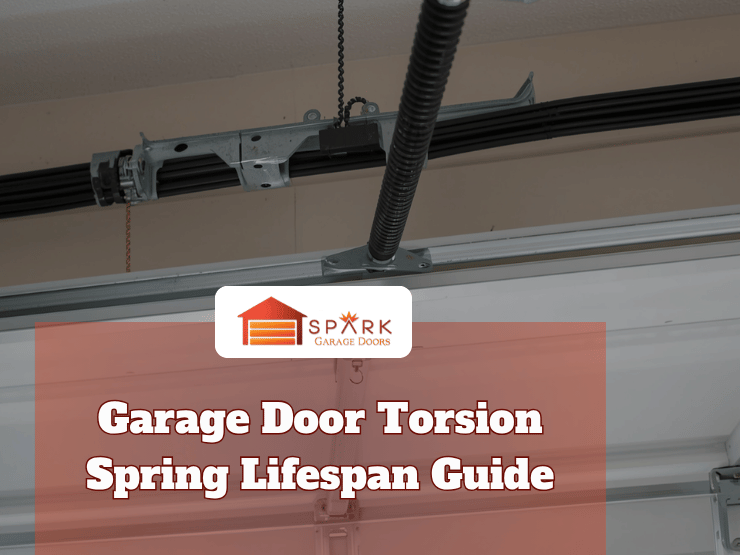
A torsion spring sits on a metal shaft above the garage door opening. When the door closes, the spring winds up and stores energy. When the door opens, the spring releases that energy to help lift the door. That stored energy is also why torsion springs are dangerous to work on without the right tools and training.
In a complete garage door system, the spring is only one part working with cables, drums, rollers, tracks, hinges, and the opener. When the torsion spring is healthy and correctly sized, the door should move smoothly and feel balanced, and the garage door opener isn’t forced to “muscle” the door up. When the spring is worn, the opener struggles, the door feels heavy, and the rest of the hardware can wear out faster.
Torsion Springs vs Extension Springs
Not every garage door uses torsion springs. Some doors use extension springs, which are typically mounted along the horizontal tracks on either side of the door. Instead of twisting on a shaft, extension springs stretch and contract to help lift the door.
Both spring types are rated by cycles, and both can fail from metal fatigue over time. Torsion springs are often preferred for smoother operation and more controlled lifting, while extension springs are common on older setups or certain door configurations. Regardless of spring type, the same principle applies: the spring’s condition directly affects how hard your opener has to work and how safely the door operates.
Springs Are Rated in Cycles, Not Years
This is the most important concept. Springs are rated by cycles, not just by time. One cycle means the door goes up and comes down once.
Most standard torsion springs are rated for about 10,000 to 15,000 cycles. In many homes, that works out to roughly 7 to 10 years of typical use. But the “years” part changes dramatically depending on how often you use the garage door. A door that opens a few times a day will get far more calendar years out of the same spring than a door that opens constantly for school runs, errands, deliveries, and evening outings.
How Daily Use Translates to Real Lifespan
A spring’s lifespan is basically a countdown based on how many times the door moves.
If you use the garage door around four times a day, which is common for many households, a 10,000-cycle spring often lands around the 7-year mark. If your household uses the door closer to eight times a day, that same spring can reach its limit in roughly 3 to 5 years.
That’s why two neighbors with identical doors can have very different experiences. One household uses the front door for most exits. Another treats the garage as the main entrance. The spring doesn’t care about the calendar. It cares about cycles.
Why Some Springs Last Much Longer Than Others
Not all springs are created equal. Many standard installations use oil-tempered torsion springs in the 10,000-cycle range. They’re a practical baseline and keep the initial cost lower.
Higher-cycle springs are available for homeowners who want longevity, especially when the garage door gets heavy daily use. Some premium spring options are built for much higher cycle counts. If your garage is the main entry point for your family, upgrading to higher-cycle springs can be a smart decision because it reduces the chance of frequent replacements and keeps the garage door system more reliable.
The Biggest Factors That Shorten Spring Life
Spring life isn’t only about usage. Several conditions can speed up wear.
Frequency of use is the number one driver, because each cycle adds stress and fatigue to the steel.
Environment matters too. High humidity and salty air can encourage corrosion. Extreme heat and intense temperature swings can also contribute to faster degradation, especially if the spring surface begins to rust.
Door weight and balance play a major role. Springs are designed for a specific door weight. If the door is heavier than expected due to added insulation, glass, overlays, or waterlogged wood panels, the springs work harder every cycle. The same thing happens when the door is out of balance due to incorrect spring sizing or aging hardware. The opener may still lift the door, but the spring is taking more strain than it should, which can shorten spring life and put extra load on the garage door opener.
How to Extend the Life of Your Springs
You don’t need a complicated routine to help springs last longer, but you do need consistency. This is where basic garage door maintenance pays off.
A periodic application of garage door spring lubricant helps reduce friction and slows down rust formation. It’s a small step that can make a noticeable difference over time. Also, keep an eye on the door’s overall operation. If the door is jerky, loud, or vibrating, those issues can indicate stress on the system, including the springs.
A professional tune-up can also help. An experienced technician can confirm the door is balanced, check cable condition, inspect bearings, and catch small alignment problems that strain the spring over thousands of cycles. Even if your springs are fine, a tune-up can protect the whole garage door system and extend the life of the garage door opener.
Common Warning Signs a Spring Is Nearing Failure
Springs rarely fail without warning, but the warnings are easy to miss if you don’t know what they look like.
One classic sign is a loud bang from the garage. When a torsion spring breaks, it can sound like something heavy has fallen.
Another sign is the door only lifting a few inches and stopping. The garage door opener is trying, but without spring assistance, it often can’t raise the door properly.
A door that suddenly feels extremely heavy is a major red flag. If you try to lift it manually and it feels far heavier than normal, the spring may be broken or failing.
A visible gap in the spring coil is a clear sign of a break. Torsion springs are tightly wound. When they snap, you can often see a separation in the coil.
What Happens If You Keep Using the Door With a Bad Spring
If a spring is failing, continuing to use the door can damage other components. The garage door opener is forced to work beyond its intended load, which can burn out the motor or strip internal gears. Cables and drums can also be stressed unevenly. In some cases, the door can come down harder than normal, creating a safety risk.
If your door is behaving strangely, it’s better to stop using it and address the cause rather than push through another week of “it still works.”
Should You Replace One Spring or Both
Many doors use two torsion springs. If one breaks, the other is often not far behind because both have experienced the same number of cycles. Replacing both at the same time is commonly recommended for balanced performance and fewer future service calls. It also helps ensure the door lifts evenly.
If your door uses extension springs instead, it’s still common practice to replace them as a pair for even lifting and safer operation.
Why Spring Replacement Should Be Professional Work
Springs are under extreme tension. Replacing them requires specialized winding bars, correct techniques, and an understanding of how to balance the door safely. This isn’t a typical DIY repair. A mistake can cause serious injury or property damage.
For most homeowners, replacing springs every 7 to 10 years is typical, depending on usage. If your door is used constantly, that interval can be shorter unless you install higher-cycle springs.
Garage door torsion springs don’t last forever, and that’s normal. They are designed to handle a certain number of cycles, usually around 10,000 to 15,000, which often translates to 7 to 10 years in many households. If you use your garage door frequently, that timeline shortens.
The best way to avoid surprise failure is to understand cycle-based lifespan, follow consistent garage door maintenance, lubricate periodically, keep the door balanced, and watch for early warning signs. When replacement time comes, choosing the right spring and using a professional installer such as Spark Garage Doors Centennial keeps the entire garage door system smooth, safe, and reliable, while also protecting your garage door opener for the long run.