
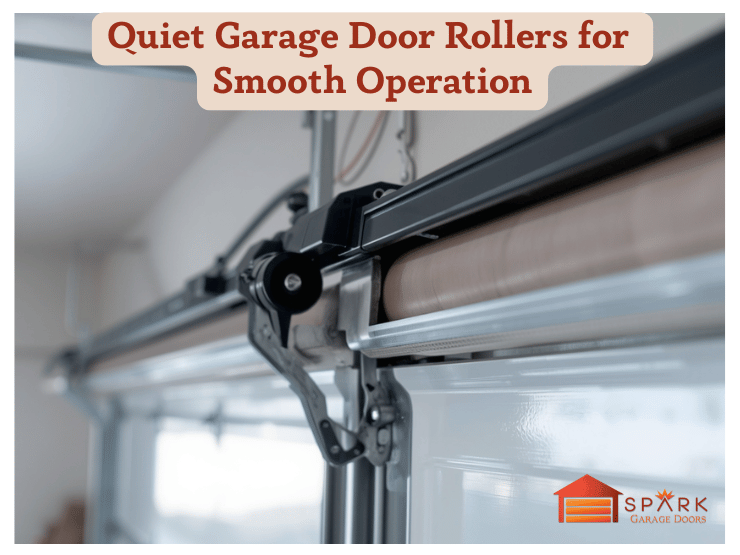
The good news is that the right rollers can make a garage door feel almost new again. Smoother movement, less vibration, and a quieter glide that you actually notice from inside the house.
What Garage Door Rollers Actually Do
Garage door rollers sit at the sides of the door and roll inside the vertical and horizontal tracks. Their job is to keep the door aligned, reduce friction, and help the door travel smoothly through the curve into the open position.
When rollers spin freely and fit the track correctly, the door moves with less effort. When they don’t, the door can wobble, bind, or create that grinding, rattling sound that makes you hesitate before hitting the opener.
Why Rollers Get Noisy Over Time
Noise usually comes from friction, vibration, or looseness. Over time, roller bearings can dry out, collect grit, or break down. The roller wheel itself can crack, flatten, or wear unevenly. Hardware can also loosen, which makes the door vibrate against the track.
If your garage door used to be quiet and now it’s loud, that change matters. It’s often a sign the rollers are worn and the system is working harder than it should.
Common Types of Garage Door Rollers
Not all rollers are built the same, and that’s why two garage doors can sound completely different even if the tracks look identical.
Steel rollers are strong, but they tend to be louder and require more regular lubrication. They can also rust in humid conditions if the bearings are not protected well.
Nylon rollers are designed to reduce noise because the wheel material dampens vibration better than metal. They also resist rust and generally run smoother when paired with quality bearings.
Neoprene rollers are another quiet-running option in some setups. They’re durable, help reduce noise, and handle moisture well, though they’re less common than nylon in typical residential upgrades.
The roller’s bearing quality is just as important as the wheel material. A cheap roller with a basic bearing can still be loud, even if it’s nylon.
The Quiet Upgrade Most Homeowners Notice Immediately
For smooth and quiet performance, high-quality nylon rollers with sealed ball bearings are usually the best upgrade. Nylon naturally reduces the hard metal-on-metal sound, and sealed bearings prevent dirt and moisture from getting into the bearing race.
If you want a practical benchmark, look for rollers with 11 to 13 ball bearings. More bearings generally means smoother rotation and less friction under load. Sealed 13-ball bearing nylon rollers are often considered the sweet spot for quiet operation and durability.
Stem length matters too. Many standard residential doors use a 4-inch stem, but it’s important to match what your door currently uses so the roller sits correctly in the hinge and track system.
How Long Do Good Rollers Last
Roller lifespan depends on usage, climate, door weight, and maintenance habits. Basic rollers may start getting noisy within a few years, especially on doors used multiple times a day.
High-quality nylon rollers, particularly those with sealed bearings, can last much longer. In many homes, they can hold up for well over a decade, sometimes into the 12 to 20 year range when the door is balanced and the track is in good shape.
A roller that lasts is not just about the wheel. It’s also about keeping friction low so the opener isn’t constantly fighting resistance.
Signs Your Rollers Need Attention
A garage door doesn’t usually fail quietly. It sends signals first.
If you hear squeaking, grinding, or a steady rumble that wasn’t there before, worn rollers are a common cause. If the door shakes, wobbles, or looks like it’s moving unevenly as it rises, that can point to rollers that aren’t rolling smoothly or are no longer fitting the track properly.
You might also notice the opener straining more than it used to, especially near the curve where the door transitions from vertical to horizontal track.
If you see cracked roller wheels, wobbling rollers, or bearings that look gritty or seized, replacement is usually the smartest move.
Bearings Matter More Than Most People Realize
A roller is only as smooth as its bearings. Bearings handle the spinning action and reduce friction. When bearings wear out, the roller may still move, but it drags instead of rolling cleanly. That dragging transfers vibration through the track and into the framing of the garage, which is why noise often feels louder inside the house than outside.
Sealed bearings are valuable because they stay cleaner. They also hold lubrication longer and resist moisture intrusion, which helps in humid climates.
Lubrication for Smooth, Quiet Rolling
Even the best rollers benefit from proper lubrication, but the type matters. A silicone-based garage door lubricant is typically a good choice for rollers and bearings because it lasts and doesn’t attract as much grime as heavier oils. Apply it to the roller axle and bearing area, not the track itself.
Lubricating the track can sometimes cause buildup and make things worse. The goal is to reduce friction where the roller spins, not create a slick surface inside the track.
Nylon rollers usually need less lubrication than steel rollers, but they’re not completely maintenance-free. A light, periodic application helps keep everything running quietly.
DIY Roller Replacement and Safety Notes
Replacing rollers sounds straightforward, but there’s a safety line you should not cross. The biggest risk around a garage door is the spring system under high tension. Roller replacement can be done safely in some cases, but only if you avoid disturbing components tied to spring tension.
Before doing anything, unplug the garage door opener so it can’t activate unexpectedly.
If you’re replacing rollers, many people do it one at a time to keep the door stable. Depending on the door design, you may need to carefully open the track slightly or remove certain brackets to slide the old roller out and the new one in. The exact method varies by door type and hinge layout.
If the work requires removing bottom brackets or dealing with cables, stop and call a professional. Those areas are directly tied to spring tension and can be dangerous.
How Rollers Protect Your Opener and Track System
Quiet rollers are nice, but the bigger advantage is reduced strain. When rollers roll smoothly, the opener works less, the track experiences less vibration, and the door stays better aligned. That can reduce wear on hinges, brackets, and even the opener’s internal drive components.
In other words, upgrading rollers is not just about comfort. It’s also a preventative maintenance move that can extend the life of the whole system.
Choosing the Right Roller for Your Door
If your goal is smooth and quiet performance, focus on two factors first: nylon wheel material and sealed ball bearings.
Then match the roller size and stem length to your door’s requirements. Many residential doors use a 2-inch roller wheel and a 4-inch stem, but it’s worth verifying so you get a proper fit.
If you live in a humid or coastal environment, rust resistance becomes even more important, which makes sealed bearing nylon rollers a strong option.
If your door is heavier or used constantly, quality bearings matter more than ever.
Garage Door Roller Services in Centennial
Garage door rollers are one of the simplest upgrades that can deliver a dramatic difference. If your door is loud, shaky, or just feels rough, worn rollers may be the reason. High-quality nylon rollers with sealed 11 to 13-ball bearings can make the door glide more quietly, reduce vibration, and ease strain on the opener. Pair that upgrade with correct lubrication and periodic inspection, and your garage door can sound and feel smooth for years. If you need a team to improve your garage door rollers or other garage parts in Centennial, choose Spark Garage Doors. Call us for expert assistance.