
Centennial Residents Should Follow These Garage Recommendations
Ventilation is also closely tied to energy efficiency. A garage that stays damp or overheated can push heat and cold into shared walls, especially when there’s a room above the garage or a doorway connecting to the house. Over time, poor ventilation can quietly increase energy costs by making nearby HVAC systems work harder to maintain a stable indoor temperature.
Why ventilation matters in Centennial’s climate
Centennial sits at a high elevation, and that affects how quickly temperatures change and how dry the air can be for long stretches. Cold mornings, bright sunny afternoons, and sudden storms are all part of normal life here. Those quick shifts can create condensation, especially when snow melts off tires and refreezes overnight, or when warm air hits cold surfaces inside the garage.
If you’ve ever noticed foggy garage windows, damp corners, or that stale “closed-up” smell, ventilation is usually the missing piece. It also helps protect your garage door components, including seals, tracks, and the opener, because moisture and grit can shorten the life of moving parts.
Start with the biggest risk: exhaust, fumes, and fire hazard
The number one ventilation hazard is vehicle exhaust. Even brief idling can allow dangerous gases to build up in an enclosed garage. Beyond that, garages often store fuels, paints, solvents, and oily rags. When vapors linger, you increase the risk of a fire hazard, especially if you run heaters, power tools, or anything with an open flame.
If you use a gas-powered heater or have a workshop setup, pay attention to ignition sources. Proper ventilation reduces the chance that a stray spark becomes a serious issue. Safety requirements are not just for commercial shops. They matter in home garages too, particularly when you’re welding, grinding, or using equipment that throws sparks.
Ventilation is not the same as leaving the door cracked.
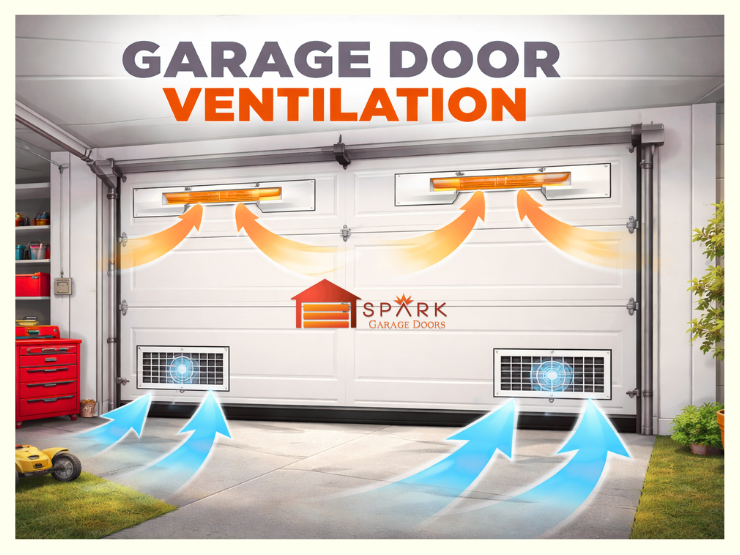
A slightly open garage door feels like it should help, but it often creates weak airflow and lets dust and cold air creep in without fully clearing fumes. Real ventilation means fresh air enters and stale air exits in a predictable path. That’s called cross-ventilation, and it’s the difference between “some air” and an actual air exchange that clears the space.
The good news is you can improve airflow without turning your garage into a drafty mess. The goal is controlled ventilation so you can get fresh air when you need it, then close up and keep your garage stable.
Use windows and door glazing the smart way
If your garage has windows, they’re one of the easiest tools for improving airflow, but they’re also easy to misuse. A single open window helps a little. Two openings on different sides of the garage can move air much more effectively. Even small changes in placement can matter, especially if your garage faces a direction that doesn’t catch much wind.
If you’re considering Garage Door Installation or upgrading your existing door, think about ventilation-friendly glazing options. Insulated glass panels can bring in daylight while helping with temperature control, which supports energy efficiency in a way that plain glass cannot. For safety, tempered glass is a common choice because it’s designed to break in a safer pattern compared to standard glass.
If your door has windows, the quality of the window frames matters. Durable window frames reduce air leaks and rattling, and they hold seals better over time. Some doors use extruded aluminum frames for strength and durability, particularly in doors with larger glass sections. These choices also influence curb appeal, which is a nice bonus if you want the garage to look as sharp as the rest of the home.
Add passive vents that work even when the door is closed
On days when it’s too cold, too windy, or too smoky to open everything up, passive vents help keep air from going stale. High vents allow warm, stale air to escape because heat rises. Low vents allow fresh air to enter and replace it. When these are set up correctly, they support steady airflow without needing you to remember to “air out” the space.
If your garage is attached, this also helps reduce odor migration into the home. It’s one of the more practical home improvements for comfort because it addresses smells at the source instead of masking them.
Use an exhaust fan when your garage doubles as a workshop or gym
If you cut wood, stain furniture, paint, or store fuel cans, a passive vent strategy may not be enough. A quiet exhaust fan gives you control. You can run it during projects and turn it off when you’re done. That kind of on-demand ventilation helps keep your garage air cleaner while protecting the rest of your home from fumes.
It can also help in winter when you want ventilation but don’t want to lose all your heat. A fan can clear the air more quickly than leaving the door open for long periods, which helps limit energy costs.
Don’t fight your Heating System and HVAC systems
Many attached garages are influenced by the home’s Heating System through shared walls, ceilings, and doorways. Some homeowners also have ductwork nearby or above the garage. When the garage air is consistently damp, smoky, or extremely cold, it affects adjacent rooms and pushes HVAC systems to compensate.
Ventilation supports energy efficiency because it helps reduce moisture and stale air, which can reduce the “load” on your home’s climate control. The key is balance. You want enough ventilation to clear fumes and moisture, but not so much uncontrolled airflow that you make your home harder to heat and cool.
Insulation and sealing still matter here. A well-sealed garage door with proper weatherstripping allows you to ventilate intentionally rather than leaking air 24/7.
Pay attention to building codes and safety requirements
If you’re adding vents, installing fans, changing door glazing, or planning a Garage Door Installation, it’s smart to consider local building codes. Requirements can affect vent placement, electrical work for fans, and safety features when you’re modifying the garage envelope.
Even if you’re not pulling permits for small changes, following safety requirements is just good practice. Proper electrical installation, safe clearances around heaters, and correct placement of vents reduce risk and help the system last.
Fix hidden issues that sabotage ventilation
Sometimes the “ventilation problem” is actually a moisture problem coming from somewhere else. Roof leaks above the garage can introduce water that keeps the space damp and musty, no matter how much you air it out. Poor grading outside the garage, gaps around window frames, or damaged weatherstripping can also pull water and dust inside.
If you smell mildew or see repeated dampness in the same spot, it’s worth checking for roof leaks or water intrusion before you assume ventilation alone will solve it.
Make day-to-day habits work with your equipment
A lot of ventilation success comes down to small habits that are easy to maintain. Use your opener to fully open the door for a short flush when the weather is decent, then close it again instead of leaving it cracked for hours. Short, intentional ventilation is often more effective and better for energy efficiency.
After a snowy day in Centennial, give the garage time to dry out. Meltwater from tires and gear is one of the most common causes of winter moisture buildup. If you store wet items, leave space around them so air can move. A crowded corner with no airflow is where odors and corrosion start.
Improve airflow without sacrificing curb appeal
Many Colorado homeowners want ventilation, but don’t want the garage to look like an industrial building. That’s where smart design choices help. Doors with well-proportioned windows, quality window frames, and insulated glass can improve curb appeal while still supporting comfort. If your garage door is due for replacement, choosing a modern door style with durable extruded aluminum framing and appropriate glazing can deliver both function and appearance.
Ventilation upgrades don’t have to look like an add-on. When planned well, they can be part of the overall look and feel of your home improvements.
A Centennial-friendly Garage approach that keeps it simple
A practical ventilation plan for Centennial is usually a mix of controlled air exchanges, passive vents, and on-demand exhaust. The goal is to clear fumes quickly, manage moisture after snow, protect tools and stored items, and reduce strain on HVAC systems and energy costs. Do that, and your garage becomes a cleaner, safer space that feels better to use year-round, without turning into a cold, drafty box. Spark Garage Doors Centennial is one of the top garage service providers in the Denver South region. Get in touch with us for installation, repair, replacement, and maintenance.