
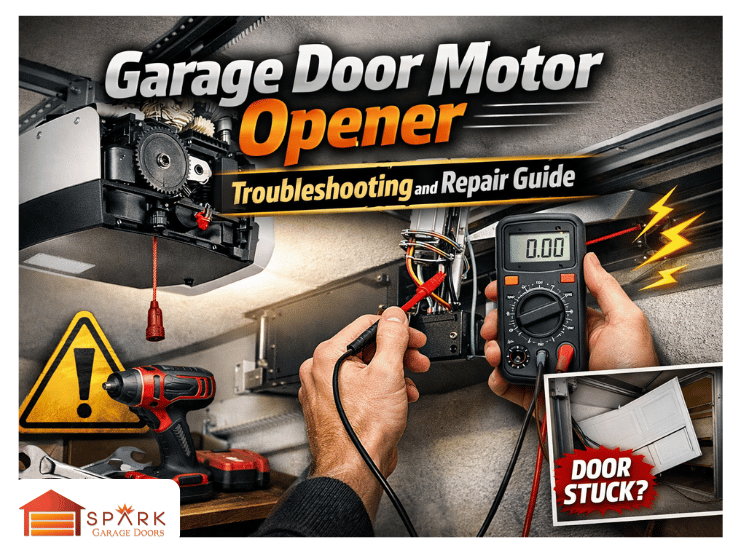
A malfunctioning garage door opener motor creates immediate inconvenience and security concerns. Understanding common motor problems helps you determine whether a simple fix will restore operation or professional repair is necessary. This guide walks you through systematic troubleshooting steps to diagnose your garage door opener issues.
Motor Runs But Door Does Not Move
When you hear the motor running but your garage door stays stationary, the problem likely involves the connection between the motor and the door mechanism. Start by checking the emergency release cord, usually a red handle hanging from the opener track. If someone pulled this cord, the door is disconnected from the opener and operates only manually.
To reconnect, pull the emergency release cord toward the motor unit while the door is closed. This should re-engage the trolley with the opener carriage. Cycle the opener once to complete the connection. If the door still does not move with the motor running, the drive mechanism may need professional attention.
Belt-drive and chain-drive openers can experience worn or broken drive components that prevent power transfer to the door. Screw-drive openers may have stripped gears. These repairs typically require replacement parts and professional installation to ensure safe operation.
Motor Does Not Run at All
A completely unresponsive motor suggests electrical issues. Check the most obvious cause first: confirm the opener is plugged in and the outlet has power. Test the outlet with another device or use a circuit tester. If power is available but the motor does not respond, the problem lies within the opener itself.
Remote control batteries die without warning, so replace them as a basic troubleshooting step. Try operating the door from the wall-mounted button to determine if the problem affects remotes only. If the wall button works but remotes do not, reprogram the remotes following your opener’s instructions.
Burned-out motors, failed capacitors, or damaged circuit boards prevent operation entirely. These components cannot be safely repaired without proper training and equipment. A motor that has overheated from excessive use may need time to cool before restarting, but repeated overheating indicates underlying problems requiring professional diagnosis.
Motor Strains or Operates Slowly
A motor that struggles to lift your door or operates unusually slowly is working harder than designed. This strain accelerates wear and eventually causes complete failure. Several factors can increase motor load beyond normal parameters.
Dirty or damaged tracks create friction that the motor must overcome with every cycle. Inspect the tracks for debris, dents, or misalignment. Clean the tracks with a damp cloth and straighten minor bends carefully. Severely damaged tracks require professional replacement.
Worn or broken springs dramatically increase motor strain. Garage door springs counterbalance the door’s weight, and when they weaken or break, the motor must lift the full door weight alone. Never attempt spring repairs yourself since these components are under extreme tension and cause serious injuries when handled incorrectly.
Lubrication neglect allows metal components to grind against each other. Apply garage door lubricant to rollers, hinges, and springs every six months. Use products specifically designed for garage doors rather than general-purpose lubricants that attract dust and debris.
Motor Reverses Unexpectedly
Modern garage door openers include safety features that reverse the door when obstacles are detected. Misaligned or dirty safety sensors cause the motor to reverse even when the path is clear. Locate the sensors near the floor on each side of the door opening.
Clean the sensor lenses with a soft cloth to remove dust and cobwebs. Check that both sensors are securely mounted and pointing directly at each other. Most sensors have indicator lights showing proper alignment, typically a steady green light when aligned correctly.
Force settings that are too sensitive cause unnecessary reversals. However, adjusting these settings requires careful calibration to maintain safety function. Consult your opener manual or a professional technician before modifying force settings.
Unusual Motor Noises
New or worsening sounds from your garage door opener indicate developing problems. Grinding noises suggest worn gears or insufficient lubrication. Squealing may indicate belt slippage or bearing wear. Clicking sounds often point to electrical relay problems.
A humming motor that does not turn indicates a failed start capacitor or seized mechanism. Do not leave the motor energized in this condition since it can overheat and create fire hazards. Disconnect power immediately and arrange for professional inspection.
When to Call a Professional
Some garage door opener problems exceed safe DIY repair. Call a professional for any issues involving springs, cables, or bottom brackets. These components store significant energy and require specialized tools and training to service safely.
Electrical problems beyond basic troubleshooting need professional attention. Opener motors operate on household current that can cause serious injury or start fires if mishandled. Circuit board repairs and motor replacements require proper diagnostic equipment and technical knowledge.
Spark Garage Door Centennial provides expert diagnosis and repair for all garage door opener problems. Our technicians identify issues quickly and recommend cost-effective solutions that restore reliable operation. Contact us today for prompt, professional service that gets your garage door working properly again.